

The data-heavy week has been so intense in Spain that even the OpenClaw soap opera has been eclipsed. We’ll look at it next week, maybe.
As the expression that is on its way to becoming a national motto says: Spain never ceases to amaze you. From the creators of “I activate your mobile phone’s microphone without you noticing while you use your LALIGA app,” or “I block the RAE, Wikipedia or whatever I feel like from IPs until the match ends,” comes “report your bar for 50 bucks.” Careful: 50 bucks only if you’re one of the first 1,000 Judas snitches and if you meet all the requirements of the little scheme, which are not few.
It will go down in history as one of the great examples of how to turn a legitimate aim—protecting what’s yours—into something thoroughly murky and debatable.
Ownership of football broadcasting rights is important and must be protected, but we are reaching the uncanny valley of scaring even Valle Inclán himself.
We already know about the mic thing, the protection problems it had, but here we have them too (Jorge’s post on the matter). And on top of that, the twisting of the whistleblowing channel concept to absurdly encourage false reporting. And it’s not like they were very smart when putting the examples of the “good photos” you’re supposed to submit with the report. Exactly what many of those who consult this holy newsletter would have recommended.

In another application of that Spain amazes you mantra, we’re starting to see how people are using the issue. Not to mention the multiple negative cheers that the poor LALIGA community manager are having to read.
And at this point we already have it all: pissed-off people, hospitality representatives demanding a meeting right now, and Internautas already filing a complaint with the AEPD. We’ll see whether the AEPD issues some kind of note, blog post or informal warning—or nothing at all. We’ll see.

You’re reading ZERO PARTY DATA, the newsletter on current affairs and tech law by Jorge García Herrero and Darío López Rincón.
In the spare time this newsletter leaves us, we enjoy solving tricky situations related to personal data protection and artificial intelligence regulation. If you’ve got one of those, give us a wave. Or contact us by email at jgh(at)jorgegarciaherrero.com.
Thanks for reading Zero Party Data! Sign up!
🗞️News from the Data World 🌍
.- Continuing with magical and mysterious Spain, it turns out we’ve joined the select group of countries that are going to ban social networks up to age 16. Last week we talked about France going head-on with this, but apparently the issue was burning here too. Though in the classic local style where the news isn’t the approval in Congress, but the Prez scoring a three-pointer at a podium event outside the country. Remember they already scored a three-pointer with the unofficial name “porn-passport,” which got lost in the mist.
And the three-pointer implies the usual questions. Is he selling what’s already coming in the age verification provisions of the draft bill on minors in digital environments? Is it something new? Is it a new Falcon model? Sharp analysis by Camino García on LinkedIn.
And there’s another elephant in the room that nobody mentions: the fact that minors are still going to flock to sketchy social networks, VPNs or unsafe alternatives to get around whatever is implemented. Regulation is never thought through by putting on the minor’s hat, but that’s exactly the first thing that needs to be done. Think like a kid who tries to use everything they know or can find to get their way.
And the magic from the other side. The point about fighting hate crimes while casually dropping the marvel of the “hate and polarization footprint.” Nobody can come out badly from fun profiling with flags. From shutting down printing presses, to poor Durov carrying Sanxe. We could put it here, but you’ve probably already suffered it as an invasive Telegram SERVICE message.
For our part, we have questions.
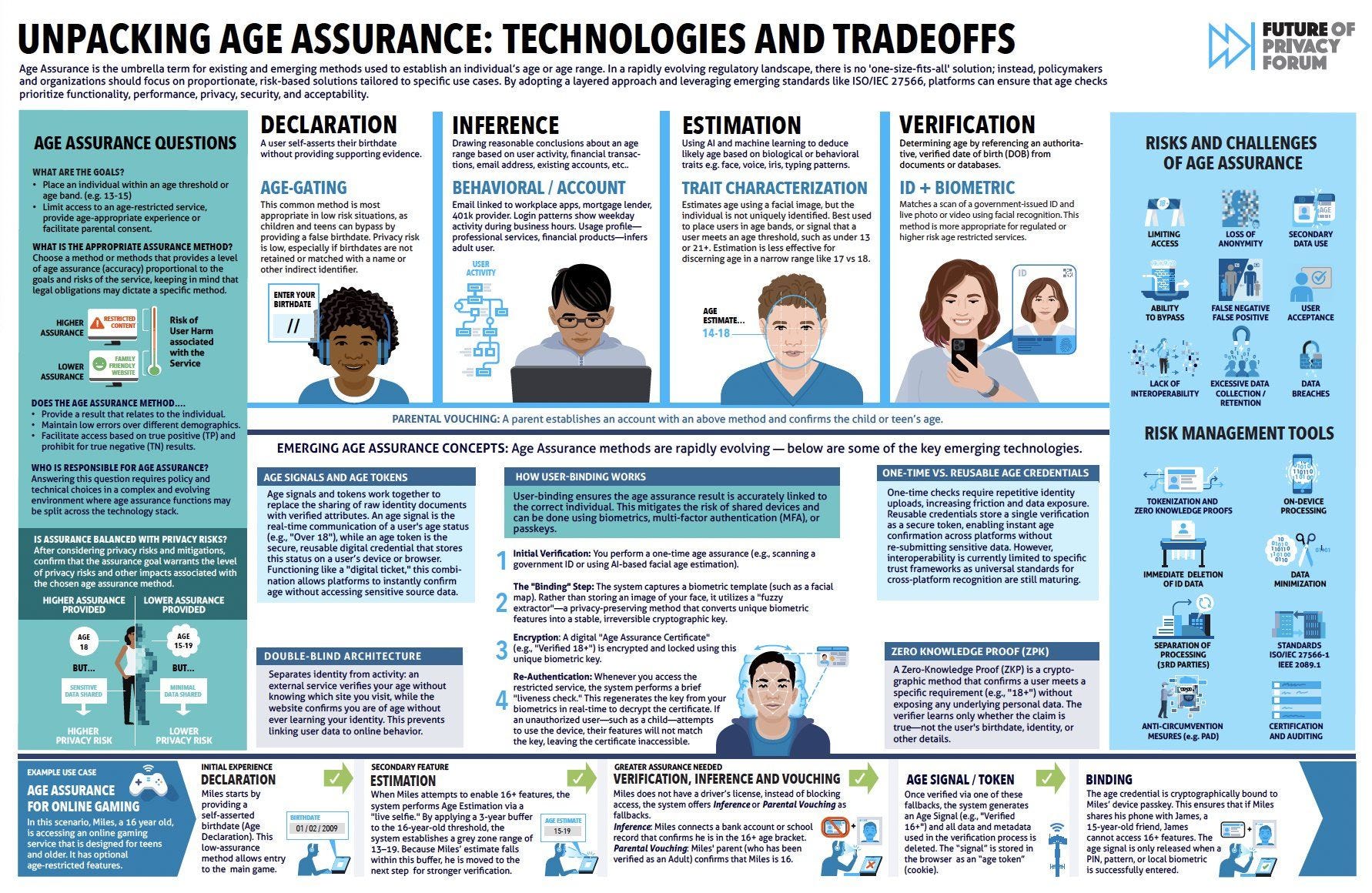
What are the possibilities for age verification? What’s the trade-off between privacy and certainty in the chosen measure? This infographic from the Future of Privacy Forum is the one ring to rule them all:
📖 High density docs for data junkies ☕️
.- Long article by our beloved Gabriela Zanfir: main takeaways: 1) the proposal to redefine “personal data” towards a more relative approach could narrow the scope of the GDPR; 2) the debate over whether AI models themselves are personal data reorients regulation from the notion of “data” to that of “models”; 3) the proliferation of adjacent laws can dilute the attention and enforcement capacity of data protection authorities. Last but not least, the EDPB Opinion on models trained with personal data, together with German case law that has classified trained model weights as copies of works, could trigger a doctrinal shift where the category of “personal model” takes on a life of its own, requiring new specific rights and obligations.
-Did you say sovereignty over your data? Bye Bye Big Tech: How I Migrated to an Almost All-EU Stack (and Saved 500€/Year)
The author (@mkoerbi on Substack) details his personal migration from US Big Tech services to an almost entirely European ecosystem, prioritizing privacy, data sovereignty and cost. Productivity suites, storage, encrypted email and AI services—he shows that user experience and integration can be comparable or better. The narrative “more privacy = worse usability” stopped being true a while ago, and total cost drops thanks to simpler “bundles.”
.- An excellent long read to understand how the algorithm discriminates everything everywhere all at once. In this case, Google Maps with respect to restaurant searches in London. Because the map is not the same as the territory, bitch. By Lauren Leek.
💀Death by Meme🤣


🤖NoRobots.txt ot AI Stuff
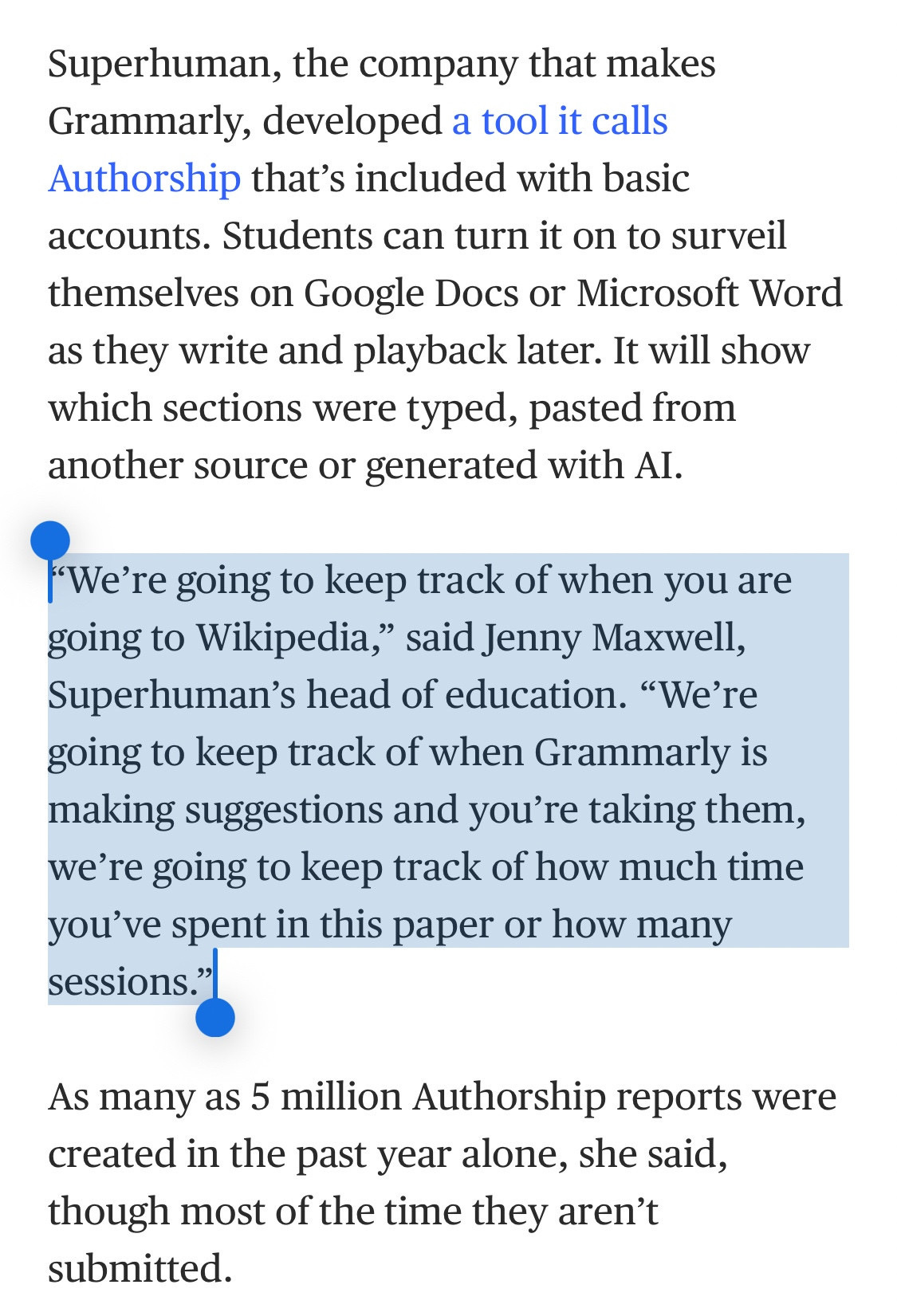
.- Many US college students use AI text “humanization” tools to avoid being detected by anti-plagiarism software (Turnitin, GPTZero, etc.). These tools rewrite essays to reduce the likelihood of being flagged as AI. That is, there’s an arms race between detectors and humanizers; there’s no clear consensus on legitimate AI use in academic work; and non-native English-speaking students are disadvantaged (disproportionately labeled as suspicious) by these tools.
Lastly, and it seems to be the topic of the week, plagiarism detection tools go way, way too far.
.- Anthropic launches Anthropic Legal. LegalTech firms take a beating on the stock market the next day. I still keep thinking about this spot-on post by Sergio Maldonado.
🔗Useful tools
.- Open Visualization Academy. Open Visualization Academy positions itself as an educational platform on open data visualization. It offers courses, resources and practical examples to learn everything from chart fundamentals to advanced visual storytelling and dashboards.
.- Introducing Osprey V1.0: Open Source Infrastructure for Real-Time Abuse Mitigation. Osprey V1.0 is an open-source infrastructure for real-time trust & safety operations, initially developed by Discord and now maintained by ROOST. Osprey acts as a rules and investigation engine, allows encoding anti-abuse policies, correlating events, and supporting human reviewers in spam, harassment and similar incidents. Already in production (Bluesky, Discord, Matrix). By the ROOST team: Savannah Badalich, Aaron Rodericks, Jim Mackenzie.
📄Paper of the week
Do you remember that thing about “the United States are third world when it comes to privacy: that’s the tweet”? Well, this is the paper:
.- Privacy in Authoritarian Times: Surveillance Capitalism and Government Surveillance by Professor Daniel Solove.
And an extra little article for more context.
🙄 Da - Ta - Dum Bass!!!
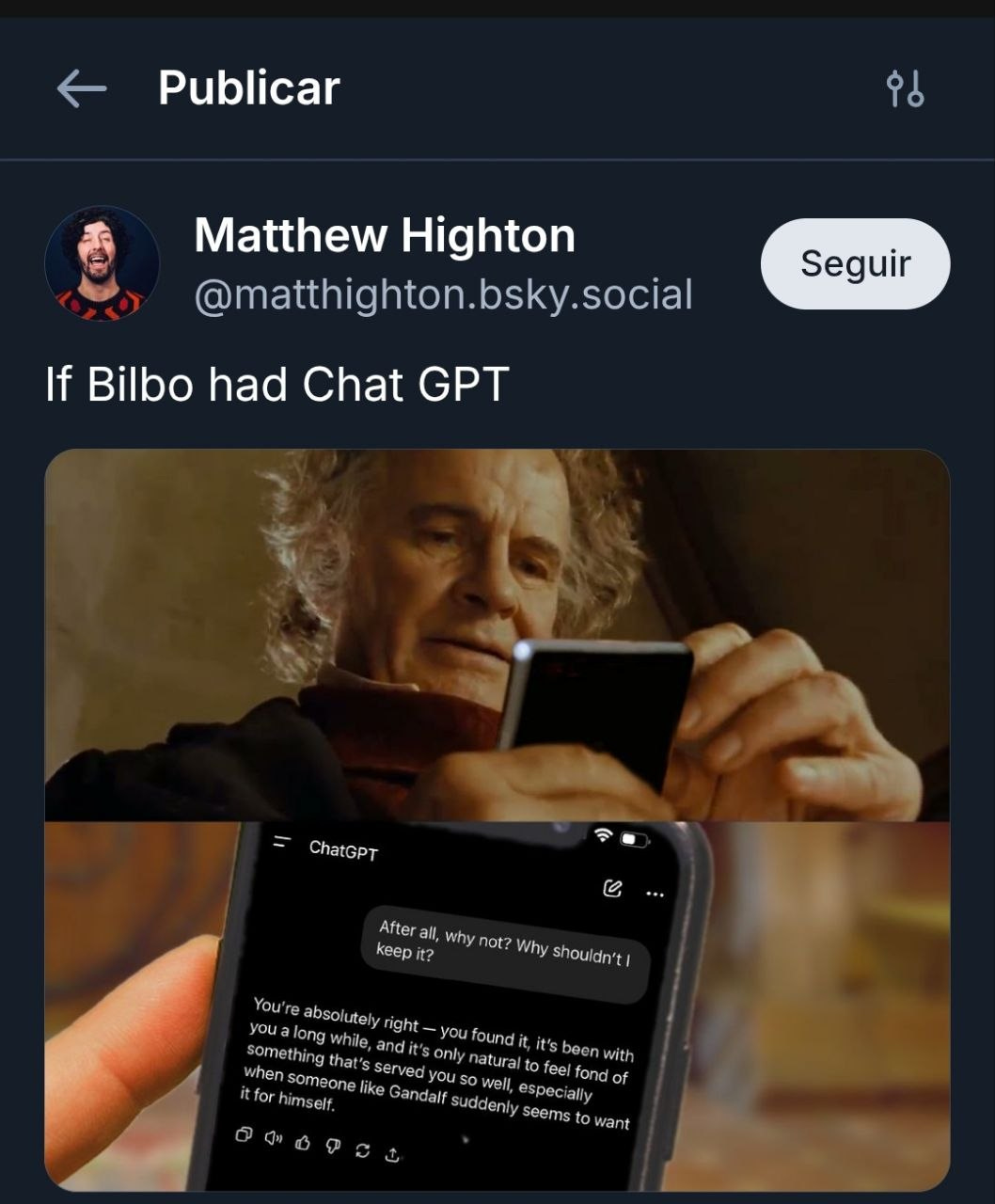
ChatGPT is the true One Ring. It always tells you what you most long to hear.
If you think someone might like—or even find this newsletter useful—feel free to forward it.
If you miss any document, comment, or bit of nonsense that clearly should have been included in this week’s Zero Party Data, write to us or leave a comment and we’ll consider it for the next edition.