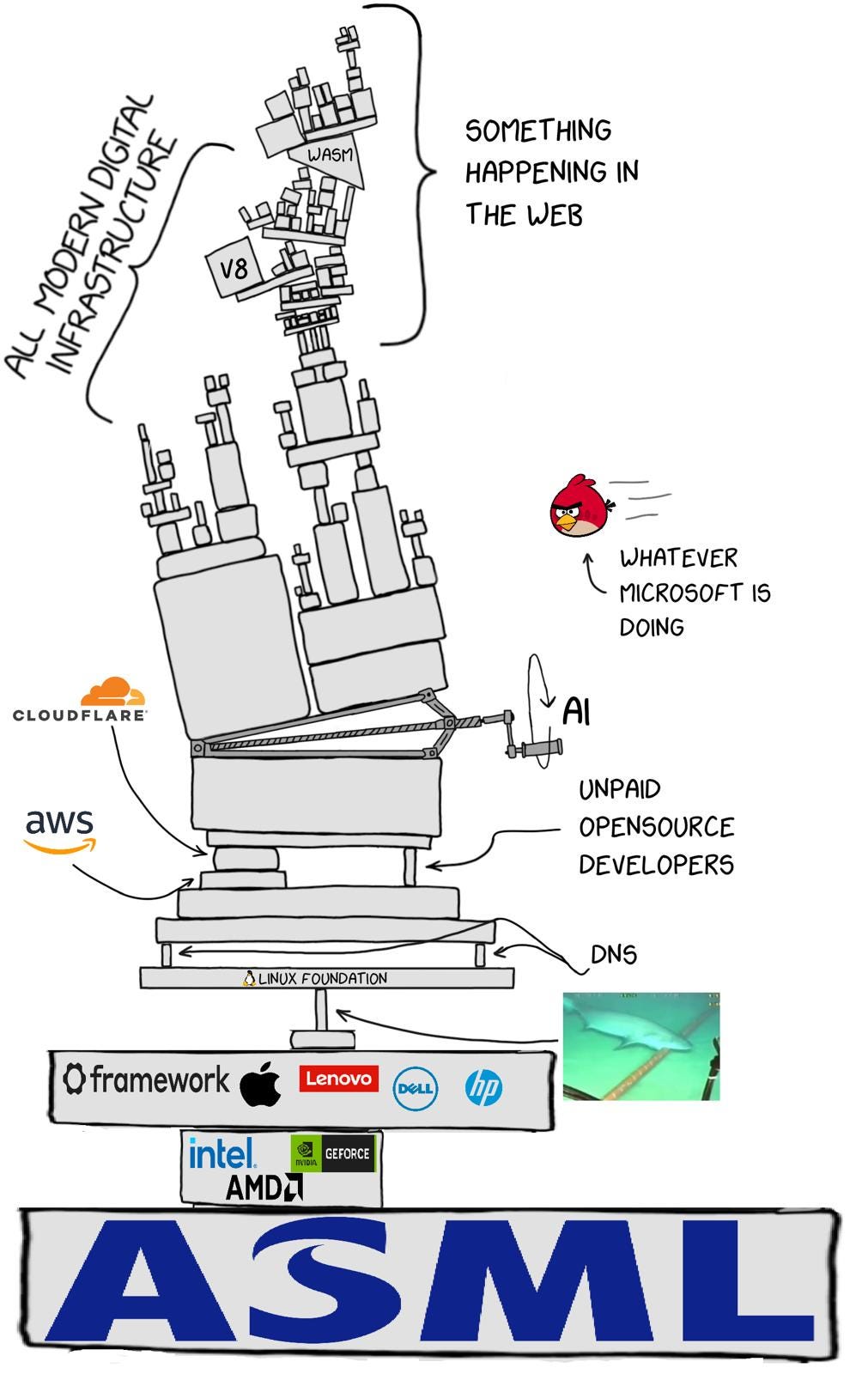
The end of last week was agonizing for anyone whose ecosystem relied on Microsoft services. You would expect the biggest of the big to have enough resources to practically work miracles, but moments like these remind us of the fundamental rules of security and life: nothing is 100% secure, and this is what happens when the world depends on one or two megacorporations always running smoothly.
The really nasty thing about this Microsoft situation was the emotional roller coaster.
Act One: the relief, all things considered, that we were dealing with a security incident that did not need to be reported because of a lack of availability of information. Neither the good guys nor the bad guys could access personal data to manipulate, delete, or copy it, so it was simply a matter of keeping an internal record and moving on.
Act Two: as the problem dragged on and on without Microsoft being able to fix it, weren’t we already facing a possible personal data breach scenario due to the increasing risk and actual harm to people’s rights? And what about the 72-hour deadline that was happily ticking away from the moment we, as data controllers, became aware of the incident?
The almost total paralysis of a company’s ordinary operations when it comes to email, cloud services, and/or the provision of services dependent on them forces you to assess things you would rather not even put in writing. So much for our relief, while we frantically searched through the Sorting Hat of data breaches (also known as the EDPB Guidelines on Examples Regarding Data Breach Notification) for a way to justify why the incident did not need to be reported either to the AEPD or to data subjects because ……… Microsoft’s information, when asked, said it wasn’t such a big deal.
Or perhaps light a candle to God, the Devil, and Pazuzu so that nothing happens. And pray that everyone else has hidden in the same missile-proof bunker as you.

You’re reading ZERO PARTY DATA. The newsletter on current affairs and technology law by Jorge García Herrero and Darío López Rincón.
In the spare time this newsletter leaves us, we sort out complicated issues involving personal data protection regulations and artificial intelligence. If you’ve got one of those, give us a wave. Or contact us by email at jgh(at)jorgegarciaherrero.com.
🗞️News of the Data world🌍
.- The sharpest reflection we’ve read on the Microsoft debacle comes from Cory Doctorow: he takes advantage of the outage that brought Outlook, Azure, Teams, and Copilot down globally for two days. His diagnosis is that competition law died when it began requiring proof of intent and market definition, two questions so fact-intensive that no case reaches a conclusion before the government of the day changes (this also happens in Europe). Microsoft lost its court case in 2001 and paid nothing; a quarter of a century later, it underpins public administrations and businesses across half the world and openly admits that it will hand over data to Washington without a court order, regardless of where the server is located. Meanwhile, it burned through thirty billion dollars in share buybacks, nearly two hundred billion on AI that it admits is barely profitable, and laid off twenty-five percent of its workforce.
It’s easy to blame AI for every disaster. But no.
.- The AEPD’s action against TikTok didn’t last long. The proceedings were closed because the Public Prosecutor’s Office is pursuing criminal proceedings to request confidentiality of the investigation and removal of the reported content. Primacy of the criminal/judicial route.

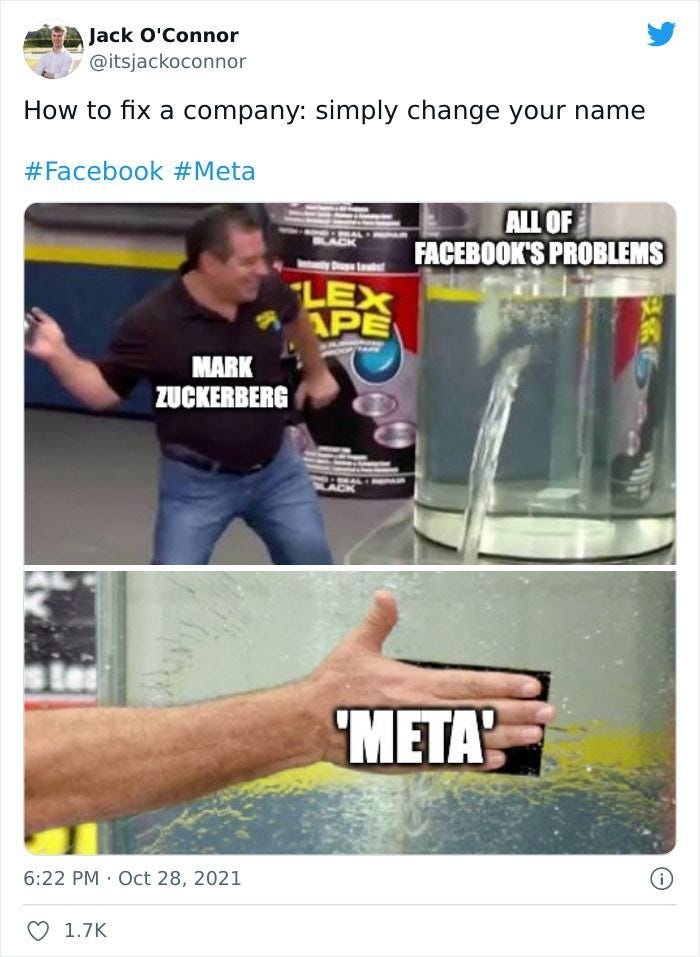
.- The price of “being Meta”: Meta and TikTok secretly paid a dozen teenage plaintiffs between two and two and a half million dollars each to prevent their claims from going to trial, according to Bloomberg’s investigation reported by Futurism. The young people alleged depression, self-harm, eating disorders, and anxiety caused by the platforms; Meta paid seven million dollars to just two of them. Yes, Meta has managed to avoid explicit adverse judgments by following the path laid out by the tobacco companies.
But nearly ten thousand personal injury cases remain pending against Meta, YouTube, Snapchat, and TikTok, along with more than a thousand school districts accusing the companies of prioritizing profits over children’s safety, with estimated exposure approaching four hundred billion dollars.
And the compensation bar keeps getting higher.
.- The Italian Data Protection Authority fines META €805 million for harvesting photos and videos from users’ galleries without any kind of consent. In practices reminiscent of classic Facebook behavior, they pulled the usual triple trick: a take-it-or-leave-it, all-purpose permission allowing the app to access the gallery for multiple purposes, a generic notice that didn’t even qualify as a first-layer privacy notice or anything genuinely understandable, and default activation of access to the entire library.
The most interesting aspects of this case:
The Garante reserves the right to investigate the use of this data for AI training.
As usual, the decision comes with a deadline to obtain consent properly and disable access by default.
As for the argument that the case should be referred to the Irish authority as the lead supervisory authority under the one-stop-shop mechanism, the Garante brushes it aside by saying that this case concerns ePrivacy exclusively. A regulation that does not provide for a one-stop-shop.
Link to the decision in Italian, in case anyone wants to go straight to the original source: Another one for META.
.- The Belgian authority has issued a compliance order against a company operating a conversational chatbot for “erotic role-play.” The interesting thing about the decision is not this updated version of premium-rate phone lines, but rather that the authority seems permissive regarding AI training. Drawing a distinction between ordinary conversational data and special-category data inferred from the subject matter, it determines that the former fits squarely within legitimate interest. To the point of considering it a legitimate expectation of the data subject that a chatbot will use data to continuously improve its conversational system.
It’s true that almost everyone knows companies will try to sneak AI training into their data processing activities, but it may be more difficult to elevate that into a claim that everyone expects and knows this will happen in every case. Especially when the authority itself seems to acknowledge that the duty to provide information was, well, rather lacking. Press release and full decision.
.- The CNIL hits a company with a €5 million fine for storing its users’ account passwords in plain text. In other words, they hadn’t even read the first line of the measures proposed in the list under Article 32 of the GDPR: “the pseudonymisation and encryption of personal data.”
To round off the fine, data retention through sheer aging: contact form data kept for up to 10 years.
📖 Hard data documents for coffee lovers ☕️
.- We’re all watching the DFA, but then the EU Kids Act will come along. The one that will finally give the EU Digital Identity Wallet some real authority, although it doesn’t look as though any country will meet the late-December deadline to have it operational. The EDPS has issued an opinion on this draft, and we’ll see what eventually comes out of it. The opinion pulls no punches:
Requiring parents or guardians to pre-approve every new contact a minor makes destroys the minor’s right to privacy. It’s good that someone is pointing out that parents and guardians must exercise responsibility, restraint, and respect toward the person whose rights they are entrusted with protecting.
No mechanisms are established to address abuses that parents or guardians may commit: a right to object to parental supervision or to report misuse. Another direct hit.
Facial age estimation is inaccurate and highly intrusive. We’ve already seen the difference between Yoti’s narrative that its technology does not involve biometrics under Article 9, and the sanction confirming that it did indeed involve Article 9 biometrics. The EDPS advocates specifically excluding these systems, although the DFA itself also follows the approach of “reasonably knowing that a minor is a minor.”
Requiring warnings before a minor publishes or shares content could encourage automated analysis and monitoring of their private conversations.
No mass monitoring or profiling of text or voice chats within video games, even though it's a daily routine.Continuing to mention self-declaration as a method of verifying guardianship is a joke.
It’s disappointing that the proposal does not take the opportunity to amend Article 8 of the GDPR and establish a single age of digital consent across the EU. It should always have been the maximum age of 16 provided for by the GDPR, without allowing a range.
Verification obligations should not enter into force until solutions such as Zero-Knowledge Proofs are fully deployed and available free of charge throughout the EU. That makes sense given the problems with this key module in the EU Digital Identity Wallet.

.- The AEPD has once again published another legal criterion on biometrics. And this time, concerning the fine imposed on FC Barcelona of half a million euros for failing to carry out a DPIA.
Barcelona implemented a biometric facial verification system for its membership register, comparing the photograph on members’ national identity documents with a selfie they submitted. There was a non-biometric alternative allowing members to update their details at the stadium itself, as well as a parallel consent-based system for storing voice recognition data for telephone procedures or ticket purchases.
Barcelona argued that a DPIA was not required because the system was not intended to identify members/did not fall under Article 35 of the GDPR, and played the get-out-of-jail-free card that the system predated the clarification/change of criteria in the EDPB Guidelines 5/22.
The AEPD accepts dropping the Article 9 infringement on that basis, but not the infringement for failing to carry out a DPIA, because the system met other criteria on the list. According to the AEPD, four circumstances applied: automated decision-making, large-scale data processing, the use of new technologies in an innovative way within the organization, and the processing of data belonging to vulnerable individuals (data concerning children under 14).
We already know the rule: at least two criteria from the list must apply for a DPIA to be required.
💀Death by Meme🤣
🤖Robots.txt or the AI Stuff
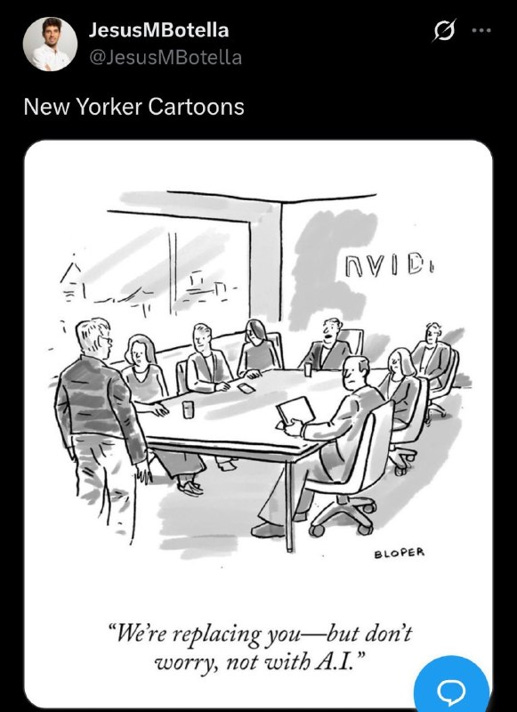
.- Interesting commentary by Adrián Todolí on a ruling concerning dismissal allegedly justified by replacement with AI. Something we're going to see increasingly often, and where the organizational or production-related change leading to the elimination of the position must be properly justified. Genuinely justified and proven, not supported by internal documentation practically created ad hoc for the trial.
.- The ICO publishes a short guide on access requests drafted using AI, and its premise is as simple as it is uncomfortable for data controllers: using a chatbot does not invalidate a request or automatically make it complex, excessive, or unfounded. I wrote a brief summary here.
.- Sunny Mann, global chair of Baker McKenzie, announces in the Wall Street Journal that the billable hour will no longer be the firm’s default billing model, replaced by value-based pricing, because AI makes it impossible to justify charging for time when a ten-hour task can be completed in two. The problem isn’t just pricing: associate targets, bonuses, promotions, and profitability are calculated based on recorded time, so the change requires inventing new productivity metrics.
The valuable and less obvious point is the Jevons paradox that Mann himself highlights: if litigation becomes cheaper, clients will pursue disputes they previously abandoned because they were too expensive, and the market could grow rather than shrink. The real obstacle won’t be clients, but partners.
On the other hand, I don’t think I’m alone in believing that, if we stick with hourly rates, the price of my hours should increase: after all, now that I have so many “friends” helping me, I can accomplish in two days what used to take me six.
And what do you think?

📃The paper of the week
.- Peter Hense dissects the Russmedia judgment (C-492/23) and concludes that the Grand Chamber has brought platforms back into the GDPR fold after twenty-five years of boasting about their supposed status as neutral intermediaries, a status borrowed from the US Section 230.
Article 1(5)(b) of the E-Commerce Directive has always stated that hosting privileges do not affect data protection: the CJEU merely read what was already there. A platform that structures, categorizes, organizes, and monetizes third-party content is a data controller, and this entails pre-publication review, identity verification, and anti-scraping measures by design. The most uncomfortable twist is that these duties do not arise from Article 9 but from Articles 5(2), 24, 25, and 32, which apply to all personal data: sensitivity determines the intensity of the obligation, not its existence. And Hense points out the fault line with Coyote and AGCOM: mere categorization does not cause you to lose hosting neutrality, but it does make you a data controller.
And sometimes a little is enough.
.- The GDPR as a tool for protecting LGBTIQ+ rights. Peter Dunne and Yong Hee Lee launch a seven-course tasting menu in the European Law Blog on the use of the GDPR as a new frontier for LGBTIQ rights, starting with Mousse (data minimization against mandatory processing on train tickets) and Deldits (rectification of the gender marker in an asylum register). Étienne Deshoulières argues that the regulation enshrines a revolution in civil registration: the state is no longer the owner of civil status data. Eszter Polgári recounts the unconventional strategy that succeeded in Deldits. Midas Nouwens warns that inferential technologies are pushing Article 9 to its limits, Felix Bieker explores collective action against transphobic practices, and Saúl Castro Fernández explains how Article 16 resolved in Spain what anti-discrimination law had failed to achieve for a transgender basketball player. Itxaso Domínguez de Olazábal emphasizes something that should be obvious to anyone considering the issue from a fundamental rights perspective: the Digital Omnibus, marketed as simplification, would weaken precisely the tools these individuals use to discover and prove that they have been profiled or exposed.
Authors: Peter Dunne; Yong Hee Lee; Étienne Deshoulières; Eszter Polgári; Midas Nouwens; Felix Bieker; Itxaso Domínguez de Olazábal; Saúl Castro Fernández; Masuma Shahid
.- Aida Ponce del Castillo and Thomas Le Bonniec strongly agree with Itxaso: in their working paper, they focus on three interconnected issues that the current Omnibus proposal would seriously undermine: workers’ ability to obtain information and exercise their rights, the legal effectiveness retained by GDPR provisions following the amendments, and the ability of authorities to detect, investigate, and impose sanctions.
🙄 Da-Tadum-bass
We’re bringing back Saturday Night Live’s most tech-oriented sketch featuring John Mulaney. Mulaney, one of the sharpest comedians of recent years, isn’t particularly AI-friendly: remember that he was hired last year to close Salesforce’s annual event with a bang. And he certainly did, boy, did he ever, just not in the way the big boys at Salesforce were expecting.
As a footnote, the sketch that has earned instant-classic status is this other one, “Sister“, which will leave you with a well-deserved feeling of discomfort, whether you’ve participated in (or silently endured) the situation it calls out.
If you're missing a document, comment or piece of nonsense that quite clearly should have appeared in this week's Zero Party Data, write to us or leave a comment and we'll consider it for next time.
Discusión sobre este post