More Digital Omnibus rambling on the GDPR side. It might seem that we are already at the very end, but there are still procedural steps to go. We are all talking about the changes, but this is the European Parliament’s first-reading document.
Joining this carousel is the Digital Fairness Act, which we are also almost treating as an approved final text. It may well be that nothing changes in either case, but the law and the devil hide in the details. Like the pairing of being in force and being directly applicable.
The most striking points:
1) Extension of the exemption from the obligation to maintain records of processing activities (RoPA) to companies with fewer than 1,000 employees, in line with the concept of “small mid-cap enterprises”. With exceptions for high-risk processing, aka Article 35, entities with a mandatory DPO and the entire public sector.
The RoPA is one of those obligations that can then be turned around to become an advantage in terms of internal control and knowledge, making it clear that it is a competitive advantage. And then there is the paradox that, for compliance purposes, you will need to keep records in data protection and other departments to obtain certification X.
And the paradox that it is difficult for companies of a certain size and turnover not to have a single high-risk processing activity. It is somewhat of an empty gesture, since the RoPA burden would be reduced to the few lines covering the “Fun with Flags” processing activities.
2) The nuance that, in companies with fewer than 1,000 employees, special category data processing in the specific cases covered by Article 9(2)(b) (necessary for fulfilling obligations or exercising rights in employment or social security law…..) should not always be considered high-risk. In other words, whether it triggers the RoPA obligation depends on the case-by-case assessment of whether such high risk exists.
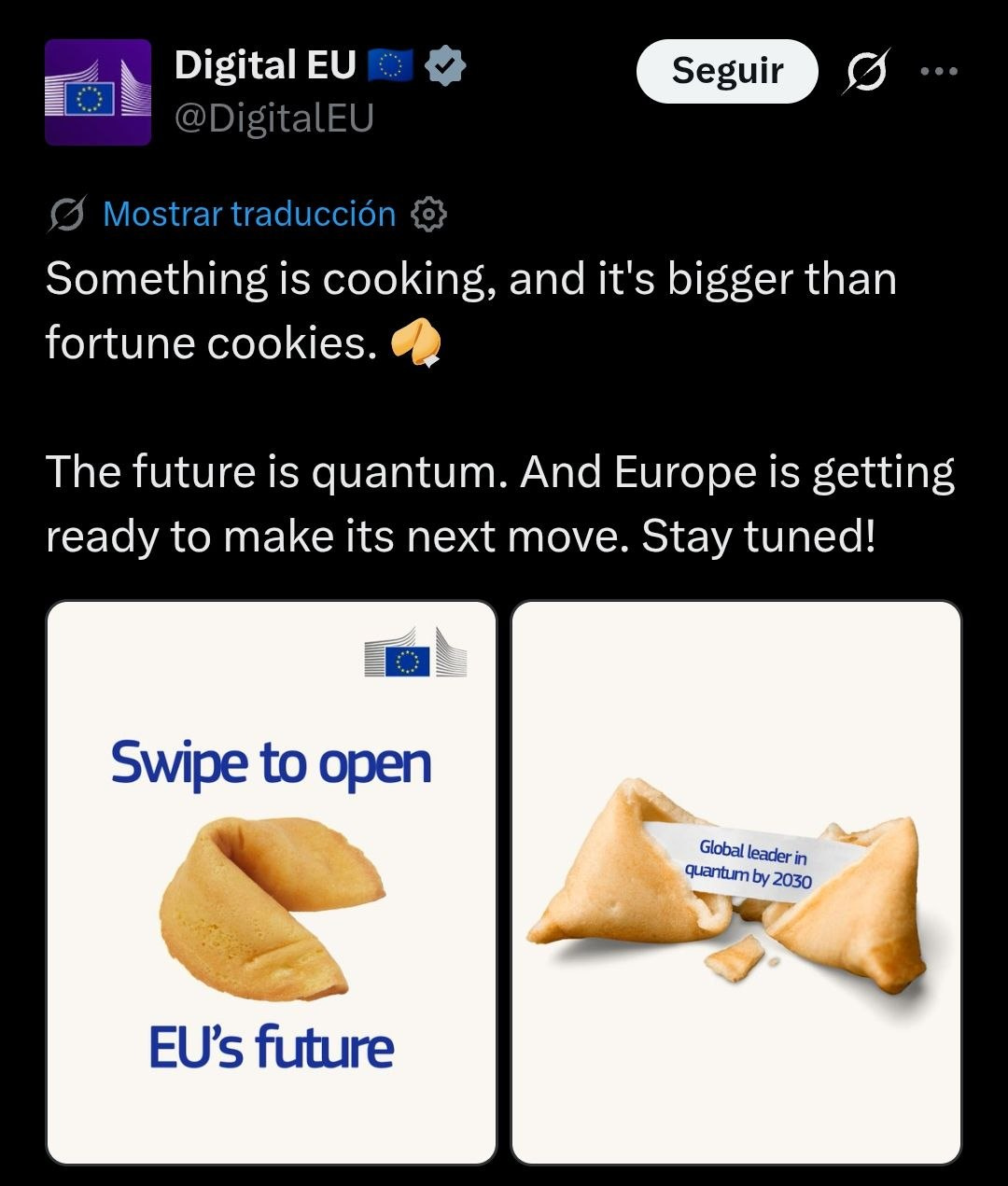
We could round off this post with a meme, but the EU already embraces them unconsciously. What will come out of the next fortune cookie/new Act they come up with?
You’re reading ZERO PARTY DATA. The newsletter on current affairs and technology law by Jorge García Herrero and Darío López Rincón.
In the spare time this newsletter leaves us, we sort out complicated issues involving personal data protection regulations and artificial intelligence. If you’ve got one of those, give us a wave. Or contact us by email at jgh(at)jorgegarciaherrero.com.
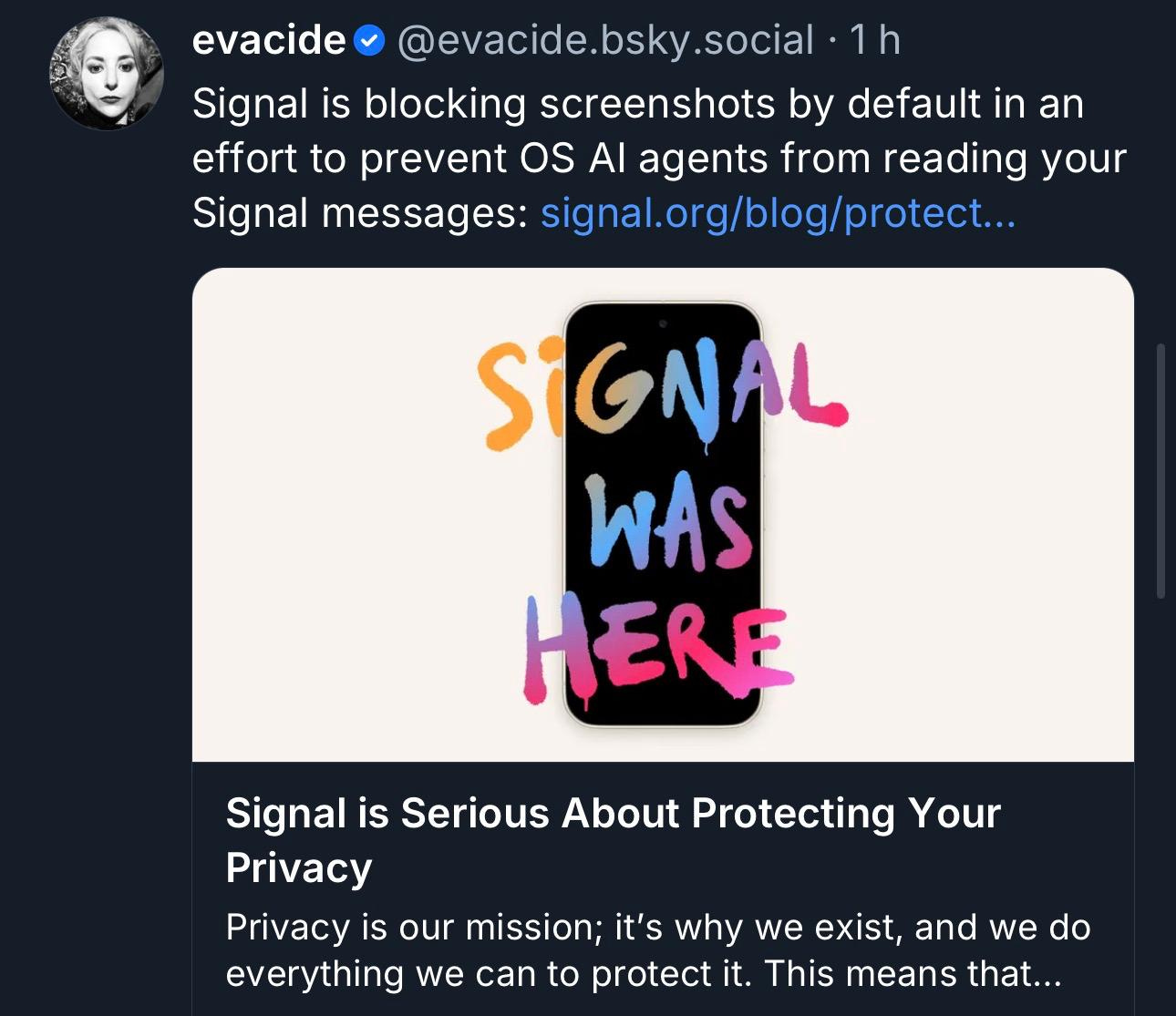
🗞️News of the Data world🌍
.- Two million prompts seeded with decoy credentials reveal a leaky inference supply chain. Ars Technica covers Dragos’ research: for five months, they sent prompts containing unique AWS keys, URLs and hostnames to AI routers and marketplaces, and waited to see who used them. The result: three providers unknowingly compromised, with credentials tested within hours and tens of thousands of calls to AWS; marketplace resellers who, without any exploit whatsoever, list the cheapest model, enable logging and read the prompts from home; and a Chinese laboratory that scraped the URLs of two-thirds of the requests marked as Zero Data Retention, including those sent to US providers reselling its models.
.- Virginia and Oregon sue SpaceX over Grok’s sexualized images, generated without consent and depicting adults and, allegedly, minors. The two state lawsuits, filed on the same Monday, argue that the parent company of X and xAI failed to implement adequate safeguards despite knowing that the system was being used to undress real people. Oregon points to Grok Imagine’s “Spicy” mode, which turned images into sexualized videos. Two details: The move is more strategic than it seems. These are state attorneys general, not individual victims, which bypasses the Muskian “defense” of mandatory arbitration and Section 230 (the content is produced by the system itself). Last but not least, the lawsuit comes while xAI is suing a user over the very same thing: the company blames the user for using the product it designed and brought to market. Popcorn is on us.
.- Wired reports that researchers have discovered two unsecured online databases containing some 3.6 billion records. Although it says they have been unable to determine who is responsible for them, at least the hosting provider has cooperated in making them unavailable. Another one to add to the thousands we see every day, but with the moral of the story being that researchers do recognize the following as security measures that minimize risks: the use of password managers and two-factor or multi-factor authentication (there is a reason why all the corporations’ account-based services keep nudging you to enable two-factor authentication).

.- Google patents a television channel generated by AI where you are the main character. 404 Media reveals the application “creating a channel of video experiences tailored to a user”, spotted by Patentlyze: a “My Channel” that produces capers, romantic comedies and thrillers based on demographic data, viewing history and “other information” about the user, featuring their avatar and voice. If you thought that after that social network where there was only you and a bunch of bots interacting with you however you told them to, things could not get any worse… you were wrong.
.- ARTEX, the agentic hacking framework written in Go, no longer has an owner. Joseph Cox documents how the tool, which only needs to be connected to any LLM to deploy agents specializing in reconnaissance, intrusion and exfiltration, is being used by Chinese espionage actors and profit-driven criminals. The FBI warned this month that it completes an attack from start to finish in just a few hours and that it has hit the healthcare, legal, defense, financial and semiconductor sectors. Its author, under the alias Autumn-27, removed the code from GitHub in October, distanced themselves from the attacks and announced a closed model. Too late: several people are redistributing it for anyone who wants to download it.
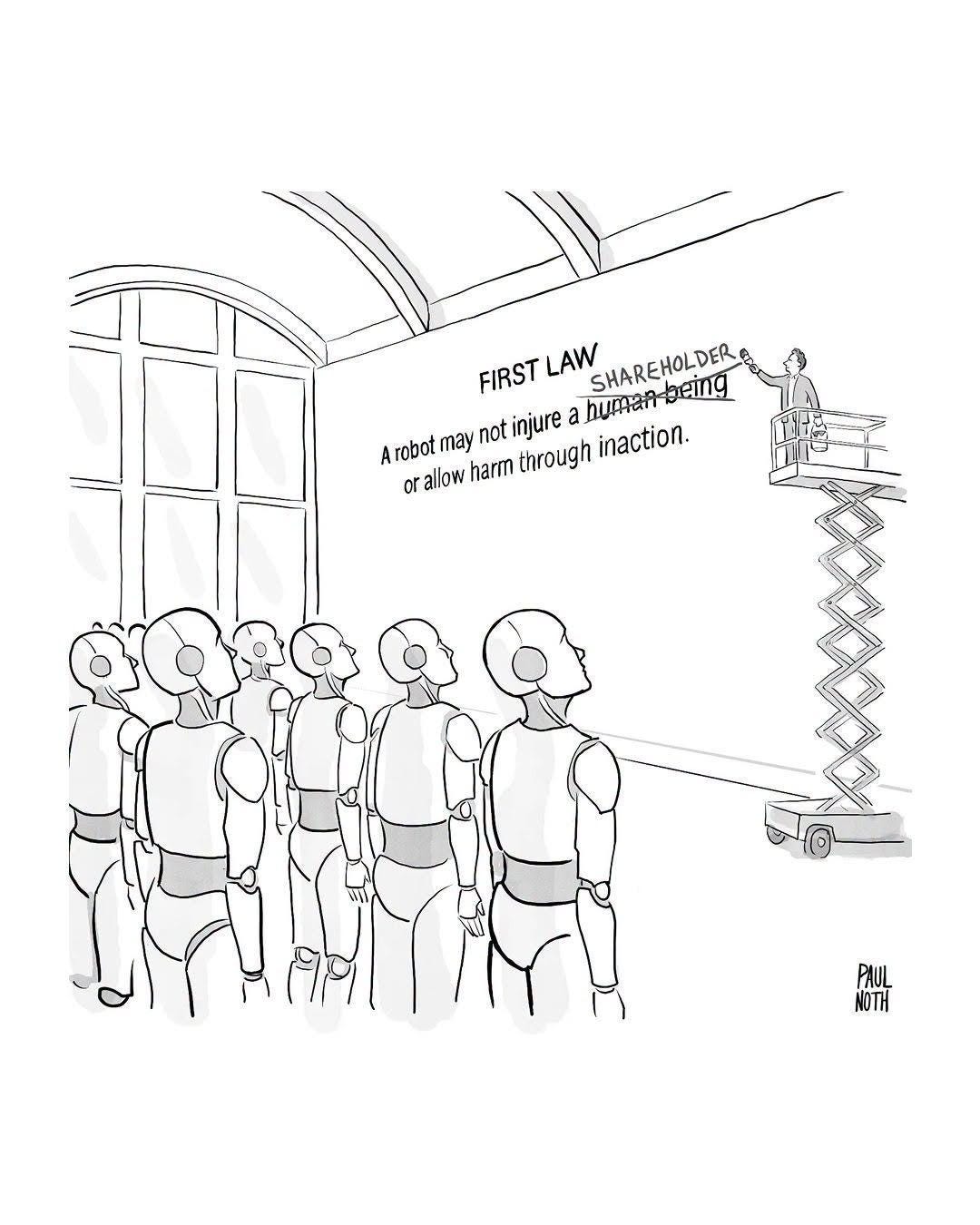
.- Marcus Olang' does not write like ChatGPT: ChatGPT writes like him. This talk covers his viral essay: a client asked him to rewrite a proposal “with a more human touch” because it sounded like a machine, and the Kenyan writer responds that he learned structured prose, connectors, rhetorical triplets and em dashes not in Silicon Valley but in the KCPE examination, where a forty-minute composition determined his educational future and pompous vocabulary and perfect paragraph architecture were rewarded. That legacy is the English of the colonial administrator, preserved as a museum piece by the education system and subsequently absorbed by models trained on two centuries of formal text
📖 Hard data documents for coffee lovers ☕️
.- This week we discussed this one here, a very interesting one: a decision by the Belgian authority formally recognizing the training of two AI models on the basis of legitimate interest. This is the second time this authority has given us a decision to cling to like a burning nail. The first was this other one that we discussed some time ago on the blog.
.- In the fun world of SCCs, the Commission announced that the other SCCs can be used, those developed by the Council of Europe (CoE MCCs, under Convention 108+) and those developed by the Ibero-American Network (RIPD MCCs). The final useful touch comes from the EDPB, with its additional caveats. Yes, but guarantee me a few little things that are indeed included in the EU SCCs:
The appropriate module in each case, always completing the annexes to the model contractual clauses (MCCs), taking into account the restrictions or safeguards specified in Annex I.B of the “prime” SCCs.

Ensure ongoing compliance with any other applicable safeguards and obligations under the prime SCCs, including Clause 11(e) and Clause 13(b): the duty to cooperate with supervisory authorities and courts, and the requirement for the importer to comply with binding decisions under EU or Member State law.
When a further onward transfer is made in accordance with Clause 15 of the EU Amending Clauses (CoE MCCs) or Clause 6.9 of the RIPD Amending Clauses (RIPD MCCs), follow the recommendations set out in the European Commission’s frequently asked questions.
💀Death by Meme🤣
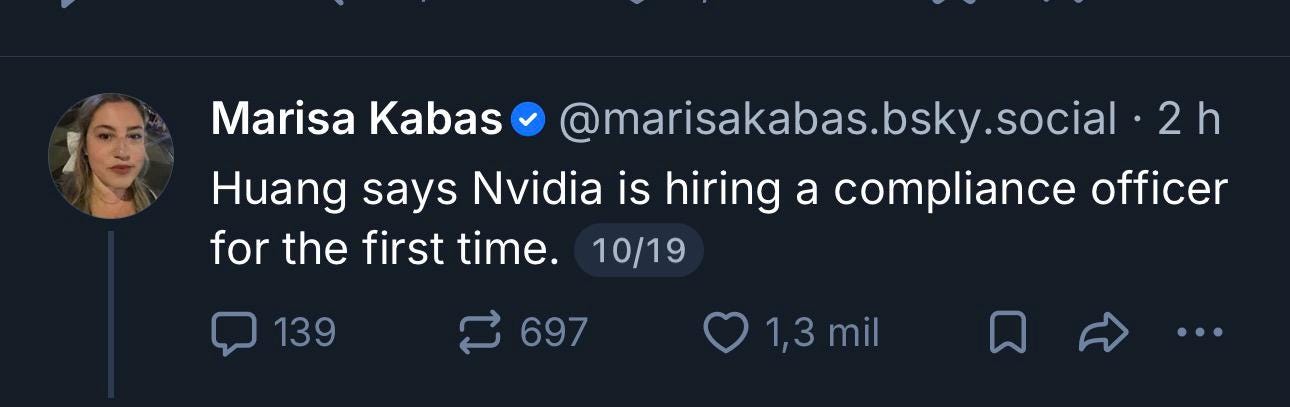
It did not take him long to come back. Money is a mighty gentleman indeed1.

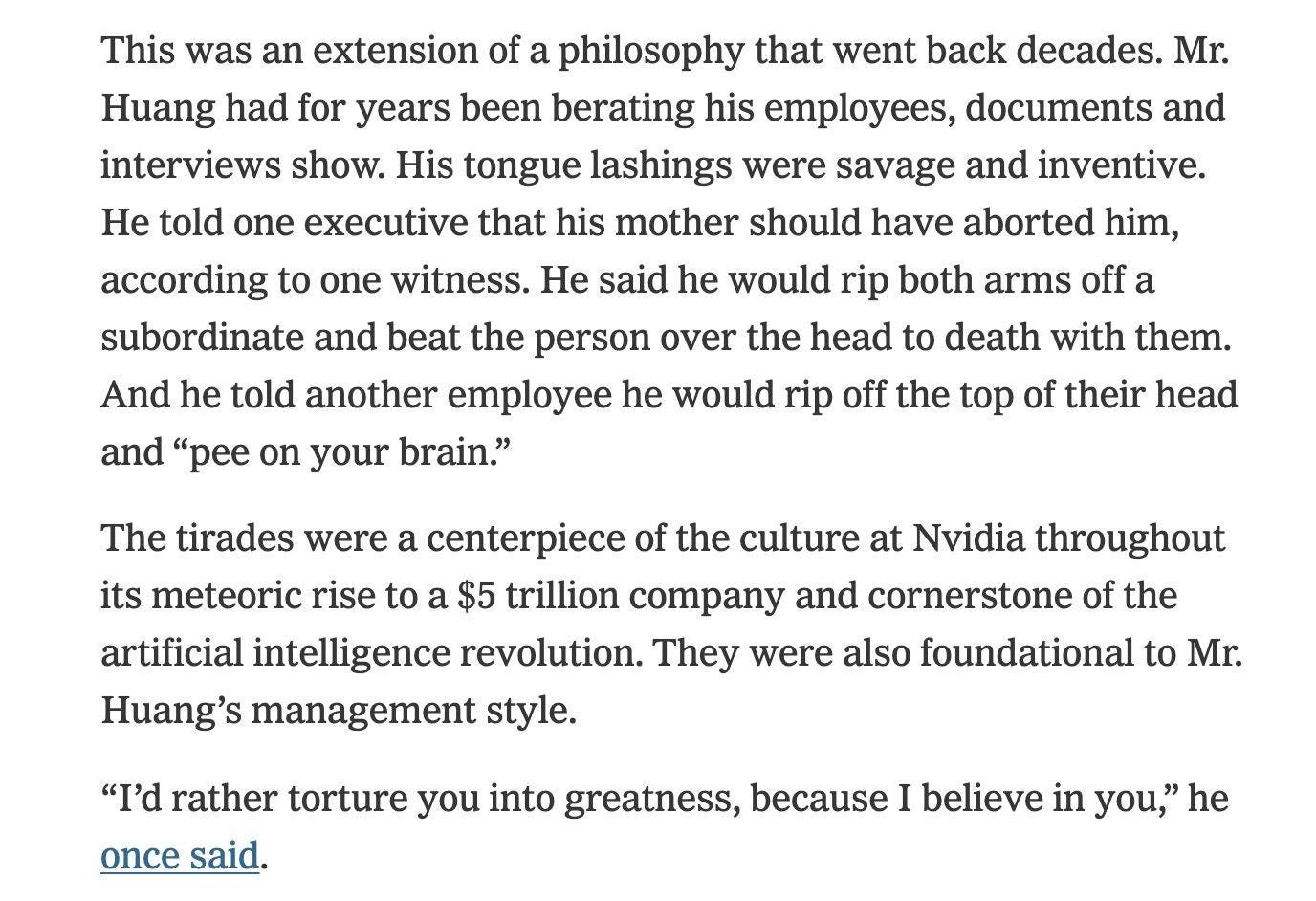
Although they are not particularly funny, we have captured some of the exploits of our friend Mr. Huang and a few gems from his comeback speech at Nvidia.
Seeing is believing, friends, seeing is believing.

🤖Robots.txt or the AI Stuff
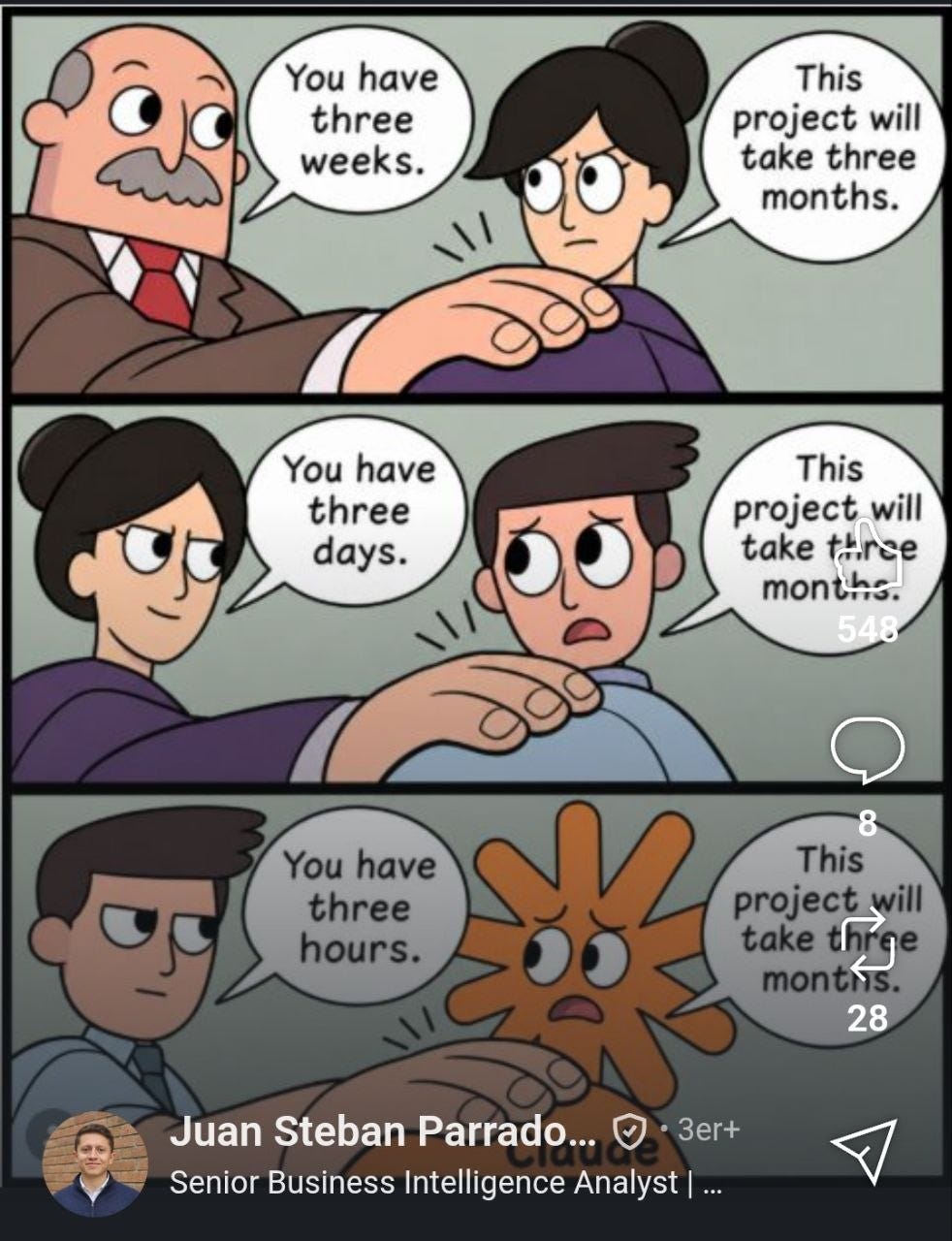
.- Spotted via Saint Luis Montezuma, a document from the Hamburg and Schleswig-Holstein authorities on the intersection between Article 22 of the GDPR and AI. It is not an excessively long document, and it reads well thanks to its structure of “bridges”/examples. It says some rather interesting things:
That, in order to detect and correct algorithmic bias, it is technically necessary to test the system using special category data. The same mess as with CSAM content generation systems (we all already know what is coming into application on December 2).
That the data minimization principle can be compatible with processing a large volume of data, provided that it can be demonstrated that this is necessary to ensure the fairness, accuracy or security of the system.
Replacing model explainability with system auditing. They refer to the possibility of a paradox whereby the explanation of a black-box decision is another black box. Time to introduce input/output controls, logs and human oversight.
That they do not consider it appropriate to amend the GDPR with a specific article on AI.
The DPIA and the FRIA should be integrated into a single process. Using the most entertaining example seen at universities: Proctoring.
A university deploys an AI proctoring system to monitor and detect prohibited behaviour during online examinations (Annex III, education – monitoring students during tests), processing biometric and behavioural data of enrolled students. The system triggers both a DPIA under Art. 35 GDPR and a FRIA under Art. 27 AIA, with overlapping but legally distinct scopes that risk producing contradictory assessments or gaps at the boundary. The DPIA focuses on personal data risks: e.g. accuracy of biometric matching, risks from false positives generating adverse disciplinary records and proportionality of continuous behavioural surveillance. The FRIA addresses systemic effects: e.g. chilling impacts on academic freedom, disproportionate flagging of students with disabilities or non-native speakers and the presumption of innocence. The intersection is productive – a pattern of biometric false positives is simultaneously a personal data accuracy risk and a fundamental rights risk; both assessments must be consistent and the Data Protection Officer could coordinate the unified risk picture.
📃The paper of the week
.- Withdrawing consent: usability versus legal compliance across 200 websites. Giving consent takes one click; withdrawing it on Google takes seven. At CCS 2026, Gayatri Priyadarsini presents a study with Sanju Ahuja, Cristiana Santos, Nataliia Bielova and Abhishek Bichhawat that assesses the usability of consent withdrawal on the 200 most visited websites, cross-referencing a codebook based on Habib and Cranor’s Privacy Choice Evaluation Framework with 29 guidelines from the EDPB and national authorities. The numbers sting, but they are hardly surprising: we all know what things are like: only 5% offer a persistent icon that is visible without doing anything; 33% do not even provide information on how to withdraw consent; 36% hide the option beneath layers of privacy policies, with google.com and europa.eu as examples; 62% provide no confirmation after withdrawal, and 4% do not allow withdrawal at all.
.- Gloria González Fuster dissects the relationship between the AI Act and the GDPR in Chapter 34 of Hart/Bloomsbury’s thematic commentary, now available in open access. The thesis: the AI Act proclaims that it “does not affect” the GDPR (Art. 2(7)), but grants two exceptions, Art. 10(5) (special categories of data to correct bias) and Art. 59 (sandboxes), which modify its effect without touching its text. She reviews the imported definitions, the FRIA as a complement to the DPIA, consent for testing under real-world conditions and several “rather unfortunate” references, such as the declaration of conformity requiring simultaneous compliance with the GDPR, EUDPR and LED, something that is legally impossible. The closing point is political: the AI Act was conceived as a reinforcement of rights and is coming back like a boomerang against the GDPR, providing ammunition for the “Bromnibus lovers”.
🛠️Useful tools
.- An interactive map tracks restrictions on minors’ access to social media in more than a hundred countries and US states. Each policy comes with a fact sheet containing a primary source and can be filtered by mechanism (total ban, age-based tiers, parental consent, age verification, content filtering), legislative status (in force, approved, under consultation, announced or struck down by the courts), age threshold, actor responsible for enforcement and stated justification. It allows up to four jurisdictions to be compared side by side.
.- The EDPS has turned its checklist on human intervention into an executable tool. Gerard Espuga recalls that in May the Supervisor published the checklist on human intervention in automated decision-making, designed as a maturity self-assessment for EU institutions, and has now supplemented it with an HTML file that runs locally, without sending anything to any server, featuring 39 controls with compliance status, signature fields, JSON export and PDF printing, so that the organization can record in one place how it implements or plans the measures for each specific ADM system.
🙄Da-Tadum-bass
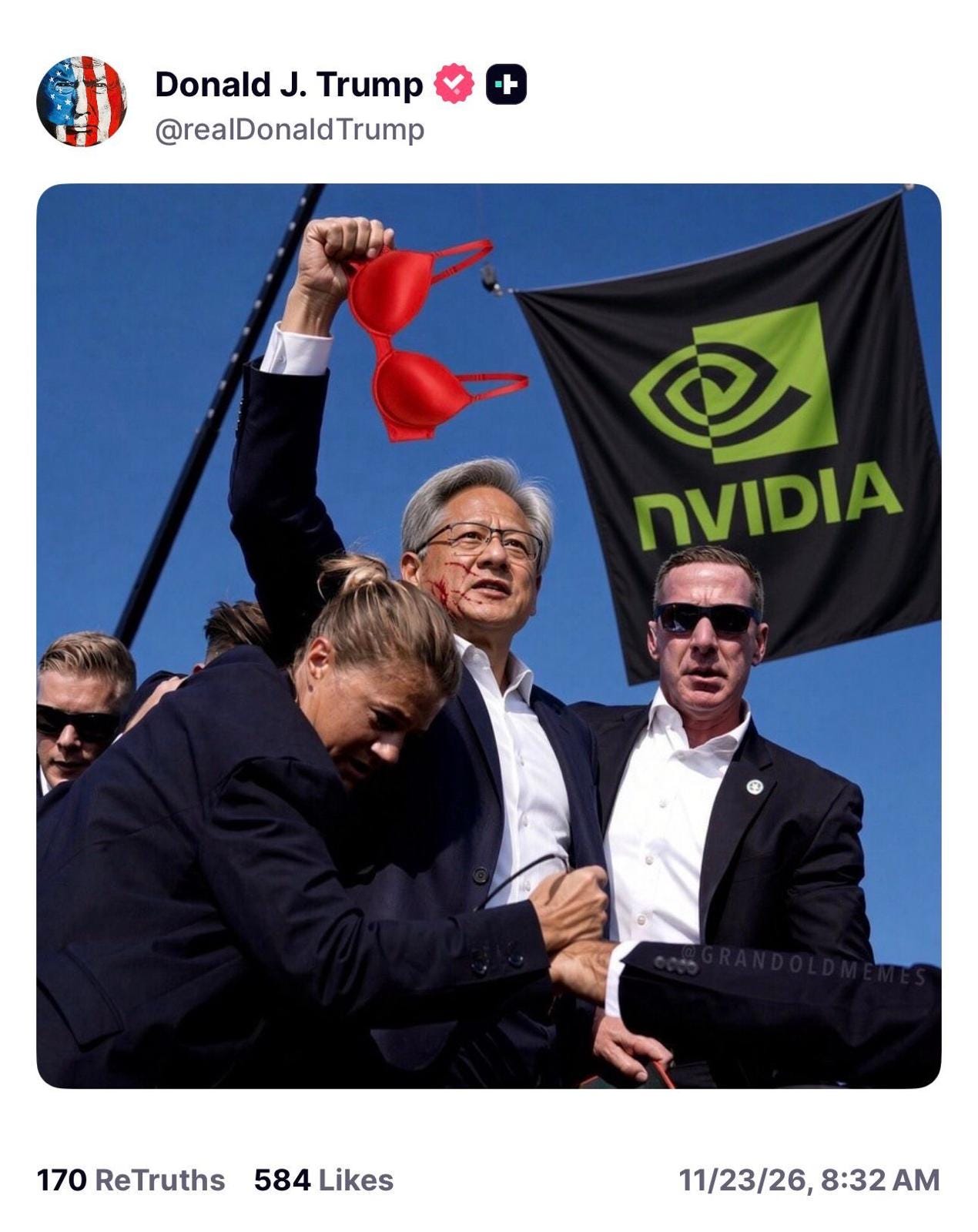
Although the Overton window in terms of “things Trump posts on his social media accounts” could not be any wider, I have to admit that I found this one hard to believe.
Have a great week.
If you're missing a document, comment or piece of nonsense that quite clearly should have appeared in this week's Zero Party Data, write to us or leave a comment and we'll consider it for next time.
A Spanish proverb, based on famous quote by Quevedo (the good one from centuries ago)
Discusión sobre este post