

In the coming days/weeks, four films will be released about four CEOs of the world’s most powerful tech companies. Well, about one who didn’t make it and three who did... at the cost of a lot of bad things.
This terrifying treehouse filled with tech-savvy supervillains could (should) be a Halloween special episode of The Simpsons, but instead, it will be four separate movies.
All four share the same common thread: they talk about the power and money that can be amassed by combining genius, a lot of data, and—here lies the common factor of cinematic interest—a policy of zero scruples.
You are reading ZERO PARTY DATA. The newsletter about current events and technology law by Jorge García Herrero and Darío López Rincón.
In the free time that this newsletter allows us, we resolve complex issues related to personal data protection regulations and artificial intelligence. If you have any of these, let us know. Or contact us by email at jgh(at)jorgegarciaherrero.com
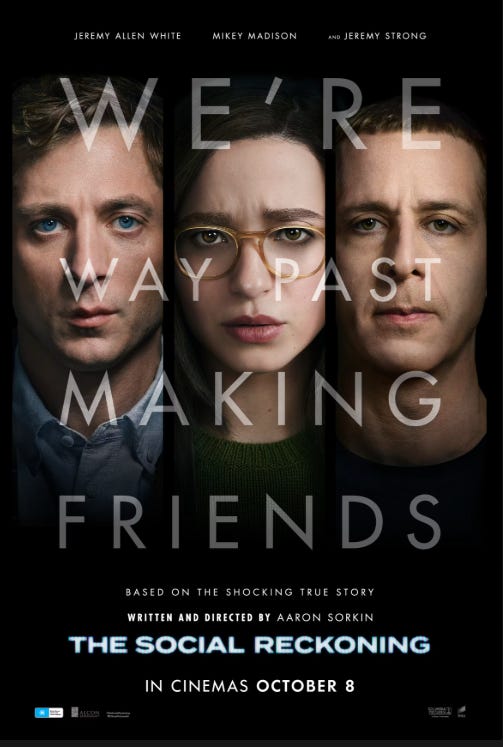
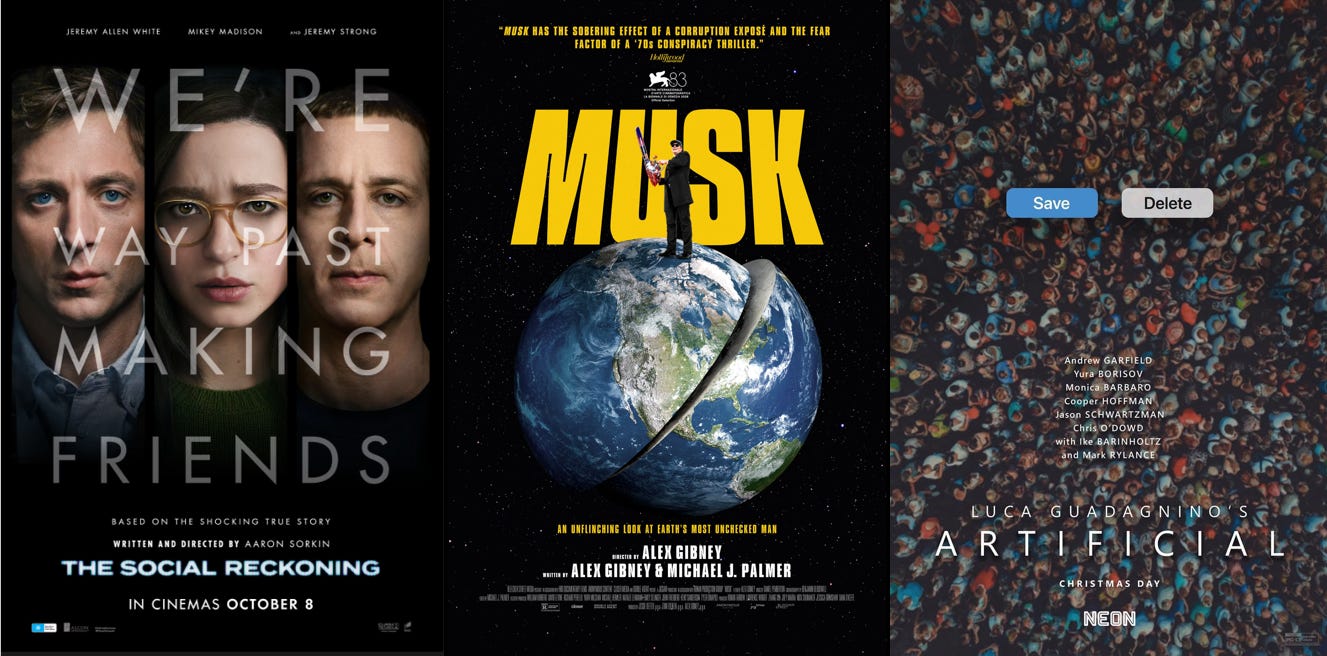
1. The Social Reckoning: timeline of Meta’s “tobacco moment”
David Fincher, director of “The Social Network,” was unavailable because he was filming that sort of sequel to “Once Upon a Time in Hollywood” centered on Cliff Booth, the character played by Brad Pitt in that movie. We barely forgive you, David (and we’ll still go see your movie).
Aaron Sorkin, one of the best screenwriters in history, has taken the reins to direct his own screenplay.
Fun facts about Sorkin:
· When Zuckerberg had the audacity to invoke freedom of speech to challenge one of the many lawsuits filed against Meta, Sorkin published an op-ed in The New York Times reminding him of the army of lawyers it took to polish, refine, and eliminate any rough edges from the script of the first part in order to minimize the potential for lawsuits against the Facebook demigod.
• Zuckerberg is not the only tech Lord of Darkness who has been through Sorkin’s grinder: “Steve Jobs” went through it too, in the film of the same name, which was much softer and more sentimental than one might have expected.
· [Off-topic] The West Wing TV series is one of Sorkin’s masterpieces, as he wrote four of its seven seasons.
Back in its day, The West Wing was criticized as an idyllic and aspirational series that portrayed Democrats as superheroes with flawless morals and lofty ideals, which is somewhat what it aims to be today. The Pitt for a hospital—if we forget about the suicidal tendencies of you-know-who.
Watching The West Wing today (and I am) gives you mixed feelings. It seems like science fiction that is more incredible than Pluribus, or a farce that is not funny at all in light of the real situation in Washington. Let’s stick – for now – with Saturday Night Live.
Jesse Eisenberg has moved on from reprising his role as Zuckerberg for reasons that anyone can imagine (he is being replaced by Jeremy Strong , who apparently didn’t suffer enough in Succession).
Mikey Madison plays Frances Haugen, and Jeremy Allen “Bear” White plays, with permission from Rosalía, the journalist from The Wall Street Journal , Jeff Horwitz, author of the book that the film is based on.
Let’s say Jesse Eisenberg has exercised his right to be forgotten regarding “that job” that he doesn’t want to hear about again.
The plot of the movie couldn’t be more relevant: the Facebook Files, the leak of internal documents that showed the company was aware of the harm its platforms were causing to its teenage users.
The $17 billion settlement that Meta reached is partly explained by this documentation, and by the involvement of several whistleblowers in the trial, and partly by the shift in the arguments of the prosecuting attorneys, who are now focusing on the algorithm that governs the Facebook and Instagram feeds, rather than just on the content displayed.
Just like the CJEU in Coyote, I guess.
CJEU’s Coyote System ruling

I’m writing this on Tuesday after noticing that people do not perceive the importance of the C-188/24 (WebGroup Czech Republic) and C-190/24 (Coyote System) judgments of the CJEU. Press release and link to the ruling.
Tentative commercial pitch: Neither Zuckerberg nor Meta has made any public statement about the film, which, coming from a company whose goal (and business) is for everyone to have an opinion about everything, is telling -and even moving- (a tear is wiped away, and F5 is pressed again).
Forecast: (Will it live up to the greatness of the first film? This bald man doubts it).
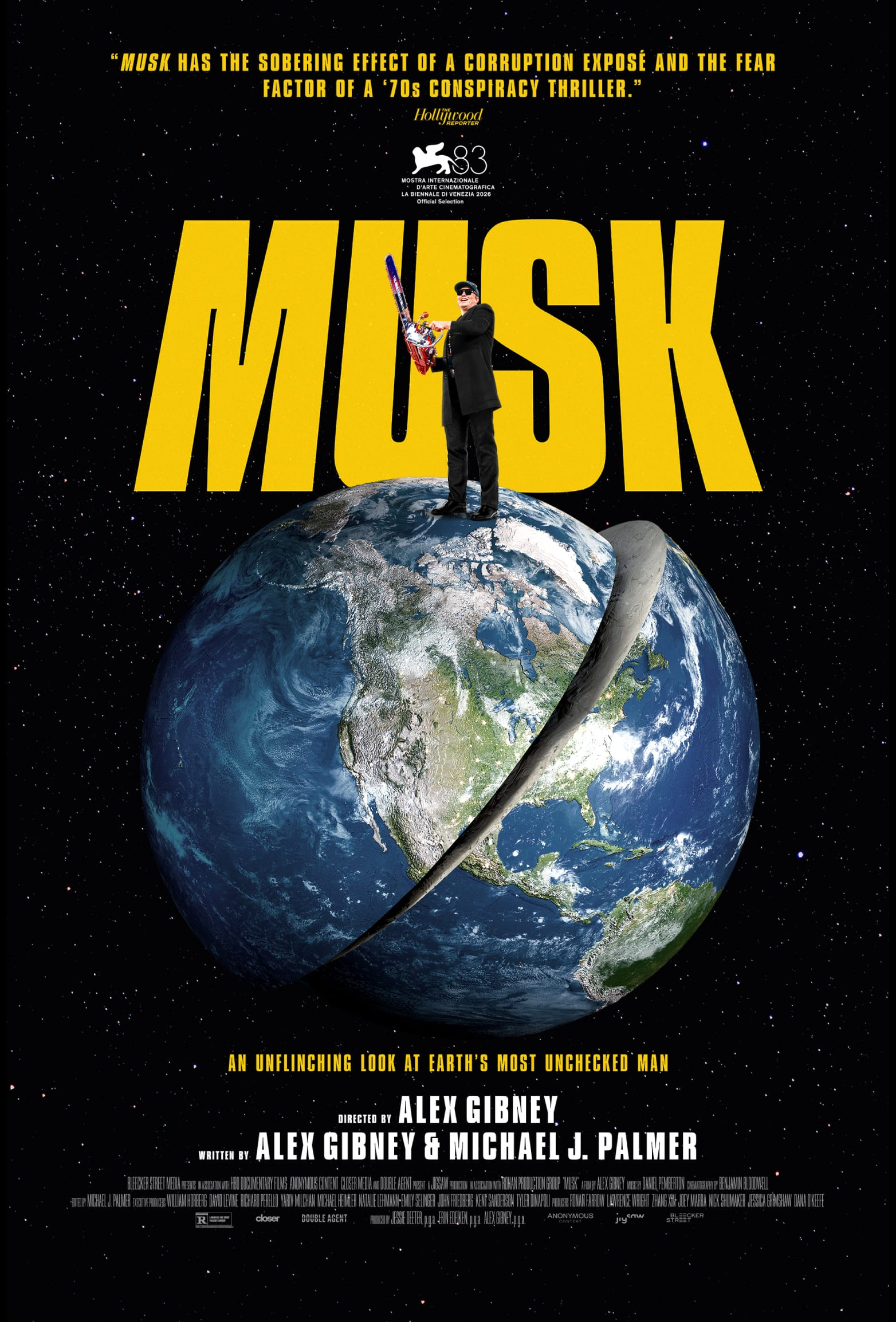
2. Musk: a four-hour documentary and a “karma-deepfake.”
Alex Gibney’s four-hour documentary. It received very good reviews at its world premiere in Venice.
It will be shown on HBO if nothing goes wrong.
And we say that because the theatrical release is making headlines due to the refusal of four dominant platforms to announce the film’s release: it’s fine, we understand that Twitter can bash whatever it wants, but the fact that TikTok, Meta, and YouTube are also joining the boycott party is something we didn’t see coming.
We already know some of the mythology surrounding Elon that is relevant to the film:
· His well-known fragile ego, something that no one questions at this point;
It seems that the -much-discussed in certain circles- deformity of their genitalia is not being talked about.
• The striking concept he has of intimate relationships with the mothers of his hundreds of children (I won’t call them “partners”). The pattern is as follows: (i) a ketamine party for two; (ii) no sex; (iii) insemination of the “lucky” chosen female with a vial of semen sent by Courier; (iv) signing binding corporate rules regarding lifestyle and education of the resulting child, along with a non-disclosure agreement, in exchange for a monthly payment of around $10,000.
Children in Brazil, 21st-century version.
Hygienic. Touch-free. Not priceless, though.
· One of the most talked-about segments of the film seems to be the one dedicated to DOGE, where it is claimed that young people between the ages of 19 and 22 (one of whom is known as “Big balls” on social media: an unbeatable credential) were placed in charge of sensitive tasks, with access to computer systems of federal agencies, classified programs, and personal information of all American citizens.
But the film’s hidden trump card would deserve a dedicated post.
To no one’s surprise, Musk refused to participate, so the production team used audio and video clips of his public statements… and had a digital twin recite them on screen.
Yes, you read that right: a deepfake that is indistinguishable from Musk, generated without his consent, using publicly available material.
Let’s remember that Article 50 of AI Act applies even if it is a film production, and we will have to see how they interpret the requirement to “label it in an appropriate way that does not hinder the exhibition or enjoyment of the work.” Will they do it in the European style or the Musk way?
Be that as it may, the fact that the victim of this evil is the guy who subverted Twitter by claiming that all public data is res nullius, or who made it possible for any user to have their personal information exposed with a single click on his own platform… is pure cinema...
I hope and wish that they included “Karma Police” as background music when the synthetic Elon speaks.
Musk described the film as a four-hour propaganda piece and a bore, and questioned the director’s integrity. One might think he hasn’t even seen it.
Tentative commercial pitch: NDA gag order as a literary expression of end times capitalism.
Prediction: They’ll have to pry it from my cold, dead hands.
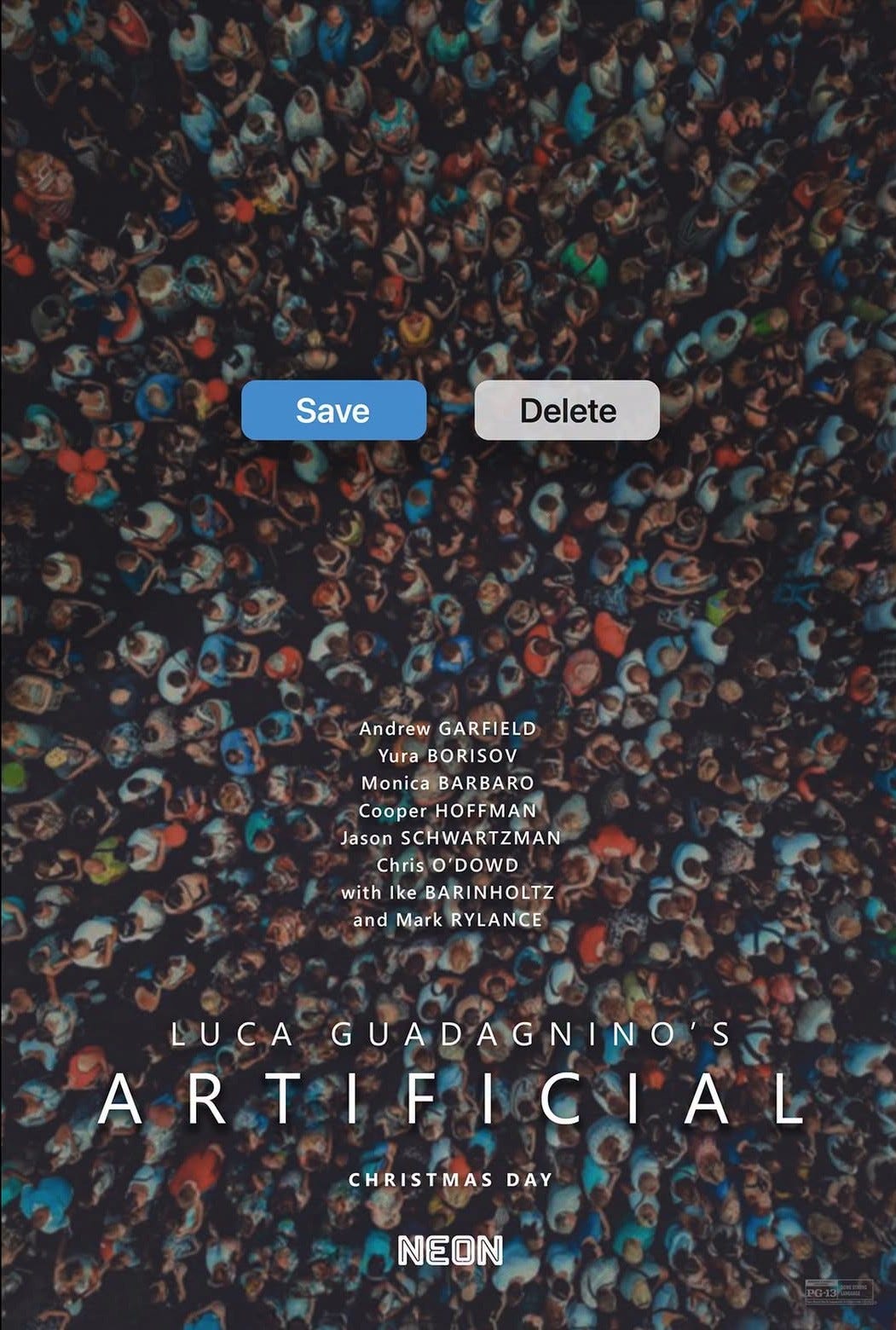
3. Artificial: The rise and fall of Sam-Va-Lentín
Luca Guadagnino directs, Andrew Garfield plays Sam Altman.
The movie tells the story of the very famous episode of Sammy’s dismissal and triumphant return to OpenAI in twelve days in November 2023. It features Mira Murati, Ilya Sutskever , and, once again, Elon.
In a strange plot twist for a film of this magnitude, it ran out of distributors when it was practically finished. Can you see the pattern here?
Amazon MGM withdrew from the film it had produced, denying that the reversal had anything to do with the small detail of the $50 billion partnership and investment agreement and AWS as the exclusive cloud provider for OpenAI’s enterprise agent platform.
Netflix, Focus Features, Lionsgate, and Warner Bros. have also refused to distribute it. Its release is scheduled for December 25, 2026, and will be handled by Neon, and honestly, we don’t know if we will be able to see it in theaters in Spain.
Tentative commercial pitch: Sam Altman, incredibly gifted at selling you anything, even the peaceful extermination of humanity, is throwing around millions to prevent people from seeing a biopic that looks bad for him.
Forecast: “Who plays better tennis?”
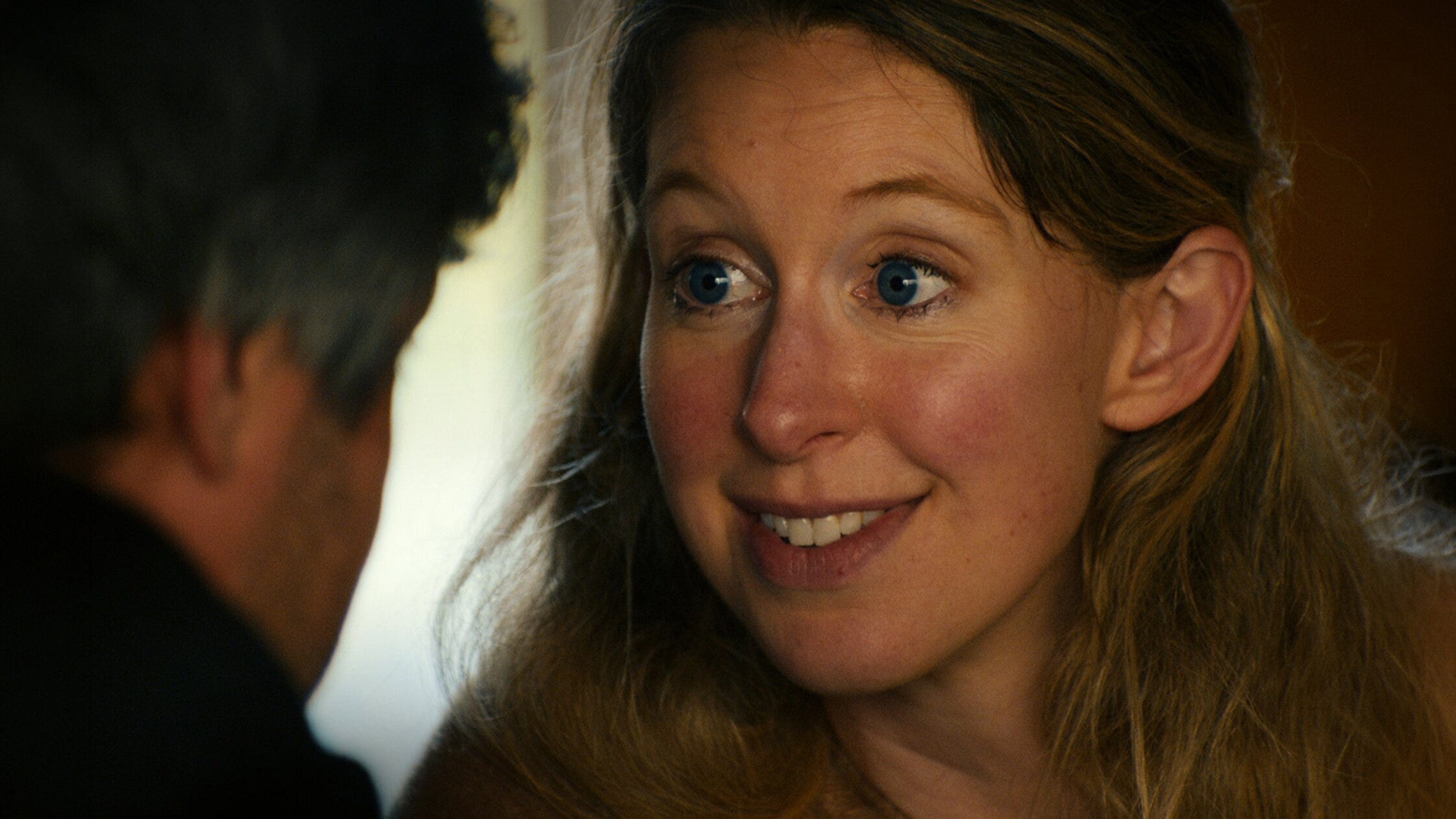
4. You Can See Everything: the horror documentary (and its limits)
Synopsis. Documentary by Nathan Fielder and Lance Oppenheim about Elizabeth Holmes and her partner Billy Evans, who invited the crew to film during the last few weeks before she went to prison.
Announced as a “horror documentary,” it lasts almost three hours, and filming took three years.
The film was produced by A24, a production company that has been turning everything it touches into gold in recent years.
The reviews are unanimous: the film gives you “everything you expect and more.”
The starting point is obviously the “Theranos” scandal, a start-up that raised obscene amounts of money based on (i) the golden image of Elizabeth Holmes and (ii) zero scientific evidence of its supposed disruptive technology in the early detection of disease markers in blood.
But if you’ve seen even a little of Nathan Fielder’s unusual work (“The Rehearsal” on HBO is as good a starting point as any), you know that when this comedian starts a project, the key is that even he doesn’t know where he’s going to take it.
“According to the available information,” the film ends up documenting things unrelated to Theranos. Evans reached an agreement with A24 executives for a profit-sharing arrangement, without the knowledge of the protagonist, who was in prison at the time; and that conversation appears within the film itself.
Amanda Seyfried —the actress who played Holmes in the TV series The Dropout—participates by reading transcripts of her words, including a phone conversation from jail.
It’s a move that mirrors the Elon deepfake, but in a AI-free version.
Tentative commercial pitch: Sensationalism in capital letters (red): “You can see everything,” a documentary constructed with intimate material, which its sneaky protagonist intended to use to her advantage (but didn’t), and which has been monetized without her involvement.
Forecast: Are there discounts for watching all four?
Jorge García Herrero
Lawyer and Data Protection Officer.